
Prepare before your dog gets wet
Fast drying begins before the bath or swim ends. Put two absorbent towels, the correctly sized robe, a brush suitable for your dog's coat and any veterinarian-approved ear-care supplies within reach. Close doors, remove slippery clutter and provide a non-slip mat. Preparation prevents a dripping dog from wandering through the house while you search for equipment.
If you are outdoors, prepare a clean area away from sand and mud. Keep fresh water available for rinsing salt or dirty lake water. Never use products in the ears unless your veterinarian has advised them.
Step 1: let water drain and squeeze gently
After rinsing, allow a few seconds for water to run from the coat. Long hair can be gently squeezed in sections from the body toward the ends. Do not twist the fur, pull the skin or squeeze painful joints. Let the dog perform one controlled shake in a safe area; shaking removes a surprising amount of loose water.
Pay attention to behavior. Drying should be calm and predictable. If your dog is fearful, use brief sessions, treats and pauses rather than forcing continuous handling.
Step 2: blot instead of rubbing
Place a towel over the back and press firmly but gently. Work along the sides, chest and belly, switching to a dry section as the fabric becomes wet. Lift each paw and blot between the pads. Pat the ear flaps, but do not push fabric or cotton swabs into the ear canal.
Rapid rubbing can create tangles and friction, especially in long, curly or fine coats. Blotting transfers water into the towel while keeping the coat more orderly. A second towel may be worthwhile for a large dog or dense undercoat.
Step 3: use an absorbent drying robe
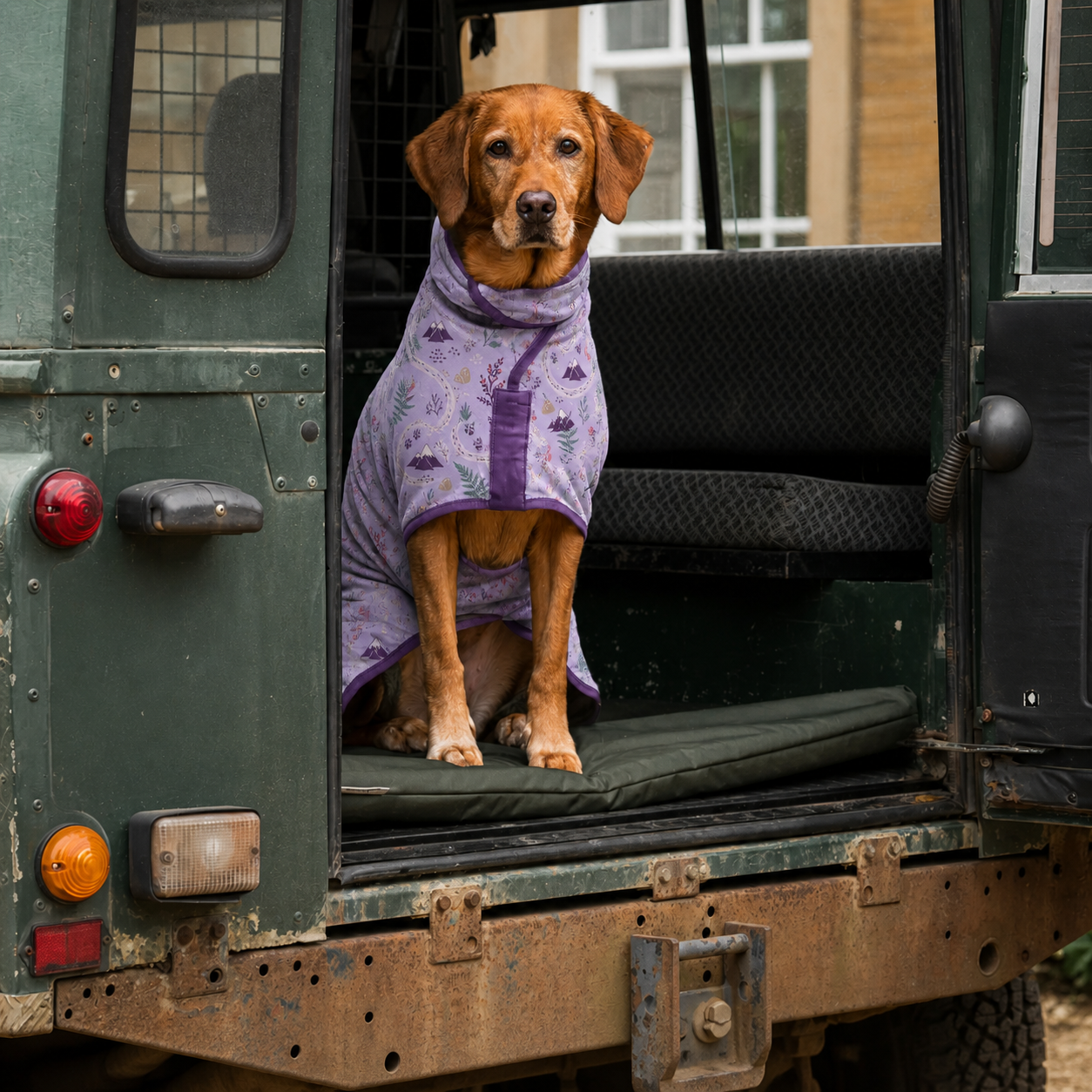
Once the dog is damp rather than dripping, put on a clean drying robe. Smooth the inner lining against the coat and fasten the wrap so it is secure but not tight. FrostPet's lining is 85% viscose and 15% polyester, paired with a 100% polyester printed outer. The robe keeps broad areas covered while you clean up or travel home.
Check under the robe every few minutes at first. Reposition bunched fur and remove the robe when saturated. Dogs with thick undercoats may need the robe followed by additional airflow, brushing or a second dry layer. The robe should never obstruct walking, breathing or normal posture.
Step 4: add safe airflow
A comfortably warm, well-ventilated room supports evaporation. If using a pet dryer, select a low, comfortable setting and follow the manufacturer's directions. Keep moving air away from eyes and ears and never use heat that feels hot on your own skin. Human hair dryers can overheat the skin or frighten dogs, so veterinary or professional grooming guidance is important.
Brush only with tools appropriate for the coat, and do not pull through wet tangles. For double-coated dogs, moisture can remain near the skin even when the surface feels dry. Part the fur in several places and check.
Special care after swimming
Before traveling home, feel beneath the front legs, along the belly and at the base of the tail. These sheltered areas often stay wetter than the visible back. Replace a soaked towel or robe instead of leaving cold, saturated fabric against the coat. In cool weather, move the dog to a protected space; in warm weather, prioritize shade and ventilation. Puppies, senior dogs and dogs with medical conditions may need an individualized plan from a veterinarian.
Rinse after saltwater, chlorinated pools and questionable freshwater. Check paws for cuts, shells, burrs and grit. Dry the outer ears and contact a veterinarian if you notice persistent head shaking, odor, redness or discharge. A robe is helpful for the ride home, but the dog must be safely restrained and monitored for overheating.
The quickest good routine is systematic: drain, blot, robe, airflow and final skin check. Skipping rinsing or using excessive heat may feel faster but creates avoidable problems. Choose an absorbent FrostPet robe in the right size when you want hands-free coverage after baths, beach trips or trail swims.
FREQUENTLY ASKED QUESTIONS
Common questions
What is the fastest safe way to dry a dog?
Let the dog shake, gently squeeze long fur, blot with an absorbent towel, use a correctly fitted drying robe and finish with safe airflow.
Can I put a drying robe on a dripping-wet dog?
Blot the coat first. A robe works more effectively during the damp stage and is less likely to become saturated immediately.
Is a human hair dryer safe for dogs?
Hot air can burn skin and noise can cause distress. Use equipment and settings designed for pets, or ask a veterinarian or professional groomer for guidance.
Find your FrostPet robe
Compare every original print in our current seven-size collection.
Shop all dog robes